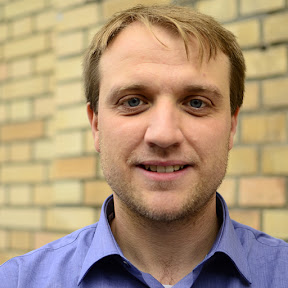
Benjamin Kuipers

Benjamin Kuipers holds an endowed Professorship in Computer Sciences at the University of Texas at Austin. He investigates the representation of commonsense and expert knowledge, with particular emphasis on the effective use of incomplete knowledge. He received his B.A. from Swarthmore College, and his Ph.D. from MIT. He has held research or faculty appointments at MIT, Tufts University, and the University of Texas. His research accomplishments include developing the  TOUR model  of spatial knowledge in the cognitive map, the  QSIM algorithm for qualitative simulation, the  Algernon system for knowledge representation, and the  Spatial Semantic Hierarchy model of knowledge for robot exploration and mapping. He has served as Department Chairman, and is a Fellow of AAAI and IEEE.

Location-Based Spatial Modelling Using Ontology

S. Yu, M. Aufaure, N. Cullot, and S. Spaccapietra. Location-based spatial modelling using ontology. In Proceedings of the 6th AGILE, Lyon, France, April 24th-26th 2003. [url]

——————————–

This paper presents an approach to model different location-based scenarios using ontologies. The authors’ approach consist in building a mediator component, able to deal with the user’s natural language abilities. This component can then interoperate with different shared ontologies providing different “points of view” on the same query. The shared ontologies are, in turn, based on local ontologies, capable of addressing and accessing local and variegate data sources.

Microworlds based on linear equation systems

J. Funke. The cognitive psychology of knowledge: The German Wissenspsychologie project., chapter Microworlds based on linear equation systems: A new approach to complex problem solving and experimental results, pages 313–330. Elsevier, Amsterdam, 1993. [url]

————————————

This article describe the DYNAMIS approach for computer-simulated scenarios. The author describe the cognitive problems of users dealing with simulations:

1. the complexity of the situation;

2. the connectivity of the variables involved;

3. the intrasparency of the situations;

4. the dinamic development of the variables:

5. the presence of multiple goals.

The author also propose some principle that can help when dealing with such systems:

1. it should be always possible to define the quality of a solution by comparing it with an optimal solution strategy;

2. the situation should realise the features of complex problems as described above.

The paper also offer a good view of an experimental setup for dealing with simulations.

hugms

This reminded me of another project, namely One2One: a toolkit for creating personalised ambient media links for conveying togetherness over a distance:

how can we give somebody a hug if they’re not near us? often this impulse will drive us to call the loved-one to ‘say hello’, or send a quick text message but does this capture our emotion? The problems that I see in this exchange are these… More often than not, calls to our mobiles catch us at the wrong time. Either we’re in an elevator, or a meeting, or having a conversation that we don’t want to interrupt. This has a psychological affect on our attitudes towards the answered call. If the call is answered, and even if we only wanted to simply express that we were thinking about the other person, we get caught in chit-chat. An expressive conversation (“hi, i’m thinking about you”) quickly turns to an instructive one (“can you grab some staples on the way home?”). Also, this interaction is absent of touch – a key form of emotional communication.

Bounded Rationality: Models of Fast and Frugal Inference

G. Gigerentzer. Bounded rationality: Models of fast and frugal inference. Swiss Journal of Economics and Statistics, 133(2):201–218, 1997. [url]

————————————

In this paper, the author describe his research field, the probabilistic mental models: “When a person makes inferences about unknown states of the world under constraints of limited knowledge and time, she is typically not in the position to calculate the optimal solution, even if such a solution would be attainable. Take The Best and its variants are fast and frugal algorithms that can draw inferences with a minimum of knowledge and computational effort. These algorithms are based on simple psychologically plausible principles. They violate two classical tenets of rationality: they do not look up all available information and they use one-reason decision making. Nevertheless, Take The Best can be as accurate as weighted linear models, and we can specify the structure of environments in which these satisficing algorithms do well. Models of bounded inference do not necessarily have to forsake accuracy for simplicity, nor rationality for psychological plausibility – the mind can have it both ways.”

Mutual modeling

Is the representation of the partner(s)’ cognitive state, namely inferences an individual make about his/her partners’ intents/understanding/purposes/goals.

This definition was taken from: Nicolas Nova, Pierre Dillenbourg, Thomas Wehrle, Jeremy Goslin, Yvan Bourquin: The Impacts of Awareness Tools on Mutual Modelling in a Collaborative Video-Game. CRIWG 2003: 99-108

And I would call ‘mutual modeling acts‘ the interactions that aims at understanding what the partners is up to, will do, aims at or get from the situation.