Precautionary approach against WiFi

Sunday night I enjoyed an edition of Report, an Italian TV show, which presented a translated edition of Paul Kenyon’s “WiFi: a warning signal”, a BBC show. Kenyon’s thesis was straight forward: we know little about the biological effects of electromagnetic fields (RF). Studies reported controversial findings on the issue. In this situation we should adopt a precautionary approach against radio technologies. I fully agree with this thesis, full stop.

In this post I am not going into the debate of the scientific evidences in favor or against the bio-effects of RF. I simply accept that we do not know enough and the we should be cautious. My point is that radio signals are all around us and it is almost impossible to protect ourself from this electrosmog, or is it? As I studied environmental protection in my high-school degree, I believe we should follow some simple guidelines to reduce exposure to radio waves. To be more precise, we should reduce the dose of electromagnetic energy that we receive each day.

Some simple things that we can do at no cost:

– Turn off unused electric/electronic appliances (standby mode is not good);

– Place cordless phones and its base station far from bedrooms (especially DECT phones);

– Turn off the WiFi router when unused and during night time;

– Do not keep the mobile phone in the pocket when we are indoor (we can place it at a arm’s reach when we are home or in the office);

– …

Ok, fine, I can turn off the WiFi antenna, but what about the neighbor’s antenna, which is always on? And what about the GSM mast tower sitting 100 meters from my bedroom’s window? Well, in this case things are slightly more complicated. But still there are shielding solutions that we can put in place. In particular there are metallic nets and sheets that we can put on the walls that reduce substantially the signal strength of the microwaves reaching our appartment. The caveat is that these layers needs to be grounded with proper wiring otherwise they accumulate static energy and they loose their beneficial effect.

Magnoshield2


Abschirm-Gewebe

Also, there exist a carbonic paint for the walls that has a shielding effect. It is called Yschield, produced by a German company.

Yshield Paint

In summary, while we wait for a definite answer on the biological effects of these radio-waves, we better be cautious and reduce the amount of RF energy that our body takes each day. Just in case 🙂

Interaction techniques for 3D Volumetric Displays

Back in Florence, at CHI2008, I attended an interesting presentation of Tovi Grossman (DGP, University of Toronto), on volumetric displays. A volumetric display is a graphical device that forms a visual representation of an object in three physical dimensions, as opposed to the planar image of traditional screens that simulate depth through a number of different visual effects. The model he presented, in fact, used a fast-turning mirrors over which an image was projected thus giving a full sense of depth.

Tovi’s PhD thesis inquired how to interact with volumetric displays. Tovi and colleagues designed techniques for selection and interaction with 3D models represented through these displays. Their approach consisted in tracking the hands of the users and the users body using infrared markers and simple video analysis techniques. Volumetric displays are limited because they do not allow deictic gestures on the surface of the model.

The paper that he presented at CHI08 suggest different techniques that can help to overcome this limitation. For instance he suggest the possibility of using a spherical highlighter: a semi-transparent sphere that can be used to highlight a certain part of the model. Different colors can be used by different users. The access control to the view and feature of the drawing raises also interesting questions on how to grant equal participation to two or more users. Their idea, to this end, was that of splitting the drawing in two each sub-model could then be controlled by a single user. Of course, the natural extension of this system is the support of remote collaboration. However, Tovi’s thesis work did not cover this topic. We can think of many other issues that would raise when collaborators are not co-located. Interesting research questions might include how to best recreate the remote collaborator’s point of view on the model (a 3D minimap à la Greenberg & Gutwin?), and how to best offer explicit referencing support over a 3D surface.

Grossman 3D-Model-Split

Grossman 3D Highlighter

Eye-Tracking Interface: Gamers’ Looks Can Kill

Stephen Vickers, of De Montfort University, UK, is working on this fascinating research project to allow eye-tracking control of real-time 3D games. There are lots of reasons why this kind of research is relevant nowadays. Personally, I like two: first, these solutions can give disabled people the opportunity to equally participate to 3D online communities than able-bodied people; second, this technology can further extend the possibilities of able-bodied people in conjunction with other input modalities.

While we begin to have an extended knowledge of eye-tracking interaction for 2D worlds, few attempts have been made on 3D interfaces. This because of the increasing complexity of interaction possibilities. In virtual worlds we need to perform a large suite of commends in order to move a a character or avatar, change the viewpoint of the scene, and to manipulate objects. Finally we need an extra set of commands to communicate with other players.

The software developed by Vickers and collaborators approaches the complexity by splitting all these commands into different input modalities in order to subset the range of possible commands. Glancing momentarily off-screen in a particular direction switches between these modalities (e.g., to a mode that rotates the avatar or viewpoint, etc.). Also, the software allows the user to define gaze gestures to enable specific commands that do not belong to a certain modality, like that of turn off the eye-gaze control, to avoid unintentional selections.

Finally, this work was presented by Howell Instance at the the Eye Tracking Research & Applications Symposium 2008 in Savannah, US, where I chaired the session on Gaze Interfaces.

PhD thesis submitted: Annotations of Maps in Collaborative Work at a Distance

The thesis if finally done. The discussion is scheduled for the 2nd of June. Darren Gergle, Sebastiano Bagnara and Denis Gillet are in the committee. I feel relieved now …

This thesis inquires how map annotations can be used to sustain remote collaboration.  Maps condense the interplay of space and communication, solving linguistic references by linking conversational content to the actual places to which it refers. This is a mechanism people are accustomed to. When we are face-to-face, we can point to things around us. However, at a distance, we need to recreate a context that can help disambiguate what we mean. A map can help recreate this context. However other technological solutions are required to allow deictic gestures over a shared map when collaborators are not co-located. This mechanism is here termed Explicit Referencing.

Two filed experiments were conducted to investigate the production of collaborative annotations of maps with mobile devices, looking for the reasons why people might want to produce these notes and how they might do so. Both studies led to very disappointing results. The reasons for this failure are attributed to the lack of a critical mass of users (social network), the lack of useful content, and limited social awareness. More importantly, the study identified a compelling effect of the way messages were organized in the tested application, which caused participants to refrain from engaging in content-driven explorations and synchronous discussions.

This last qualitative observation was refined in a controlled experiment where remote participants had to solve a problem collaboratively, using chat tools that differed in the way a user could relate an utterance to a shared map. Results indicated that team performance is improved by the Explicit Referencing mechanisms. However, when this is implemented in a way that is detrimental to the linearity of the conversation, resulting in the visual dispersion or scattering of messages, its use has negative consequences for collaborative work at a distance. Additionally, an analysis of the eye movements of the participants over the map helped to ascertain the interplay of deixis and gaze in collaboration. A primary relation was found between the pair’s recurrence of eye movements and their task performance.

Finally, this thesis presents an algorithm that detects misunderstandings in collaborative work at a distance. It analyses the movements of collaborators’ eyes over the shared map, their utterances containing references to this workspace, and the availability of ‘remote’ deictic gestures. The algorithm associates the distance between the gazes of the emitter and gazes of the receiver of a message with the probability that the recipient did not understand the message.

Keywords: Computer-Mediated Communication, Computer-Supported Cooperative Work (CSCW), Deictic Gestures, Eye-Tracking, Human-Computer Interaction (HCI), Location-Based Services, Map Annotations, Remote Deixis, Spatial Cognition.

Deixis and gaze in collaborative work at a distance (over a shared map)

The paper I recently presented in Savannah, GA during Eye-Tracking Research and Applications ETRA, was recently published in the ACM digital library.

Cherubini, M., Nüssli, M.-A., and Dillenbourg, P. Deixis and gaze in collaborative work at a distance (over a shared map): a computational model to detect misunderstandings. In Proceedings of the International Symposium on Eye Tracking Research & Applications (ETRA2008) (Savannah, GA, USA, March 26-28 2008), Association for Computing Machinery, ACM Press. [url]

This paper presents an algorithm that detects misunderstandings in collaborative work at a distance. It analyses the movements of collaborators’ eyes on the shared workspace, their utterances containing references about this workspace, and the availability of ‘remote’ deictic gestures. This method is based on two findings: 1. participants look at the points they are talking about in their message; 2. their gazes are more dense around these points compared to other random looks in the same timeframe. The algorithm associates the distance between the gazes of the emitter and gazes of the receiver of a message with the probability that the recipient did not understand the message.

More

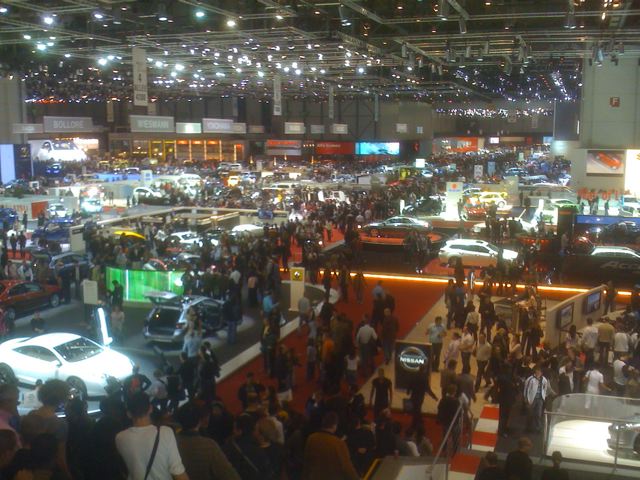
International Motor Show, Geneva

Two weeks ago, I visited the 78th international motor show in Geneva. It was a very interesting experience. I was particularly interested in seeing all the hybrid cars that were proposed as innovative. With my big surprise there were few. Lots of SUVs and extremely expensive, shiny and pollutant cars. 🙁

Img 0100

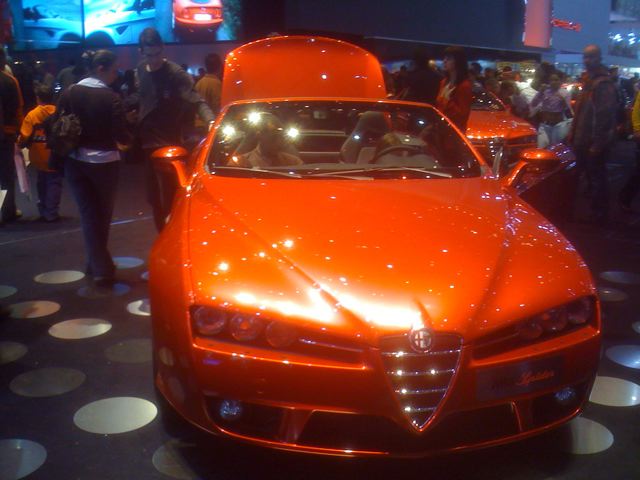
For instance, my attention was captured by the great color of the new Alfa Romeo cars presented. They spent a great deal of money to develop a metallic color that shines like hell. They did not care about the car’s consumption though.

Img 0114

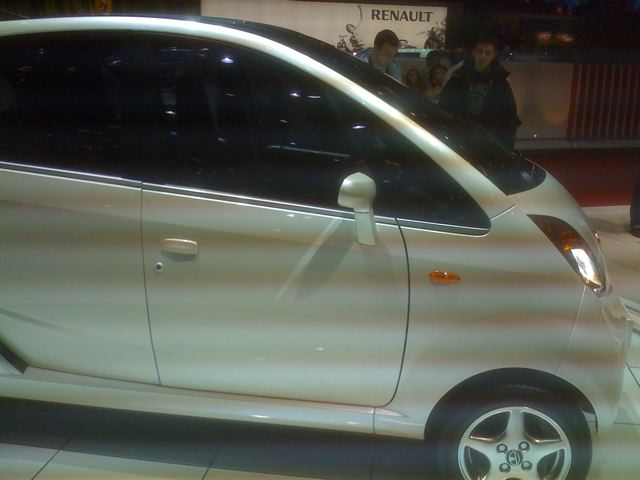
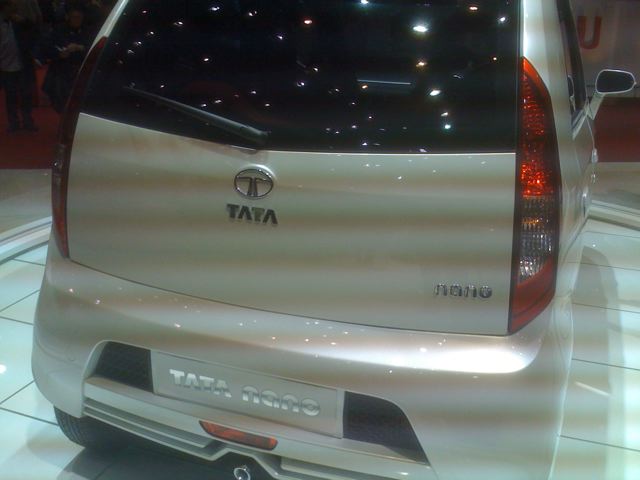
Then, I visited the stand of TATA motors. This is an Indian group that is looking for a different approach to car conception. Instead of striving for the style, they look at consumption and costs. They are producing a car called Tata Nano that is going to the market with an initial price of 2000 euro. The car sports a 750 cc engine that reduces of a fourth the usual consumption of a city car. I consider this as a killer product.

Img 0103  Img 0105

Finally, It is worth to mention the PIVO2, a concept car from Nissan. First of all, the car sports an hybrid engine, something rare for its size. Then the design looks really futuristic. The car has one door only, in the front. Then the cabin and the wheels turns in all directions, making it perfect for parking in a densely urbanized area.

Img 0108

Feral Robots and Environmental Health Clinic

I have always been fascinated by the work of Natalie Jeremijenko. She is an artist whose background includes studies in biochemistry, physics, neuroscience and precision engineering.

Lately she has been working on installations and projects to make people aware of their ecological footprints. One of her projects I reviewed in the past was OneTrees: a great deal of cloned trees. She planted them in the SF area. Because of their genetic similarities, their differences in growth can be attributed to the different levels of CO2 to which they are exposed. Therefore she thought of using the trees as CO2 sensors.

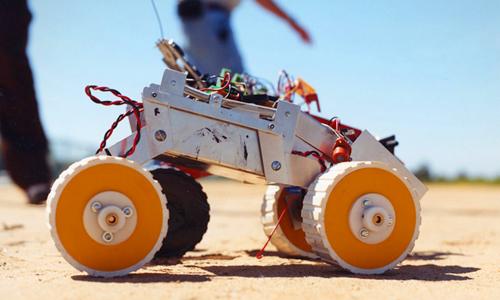
More recently she worked on the Feral Robots project, an Open Source robotics project providing resources and support for upgrading the raison d’etre of commercially available robotic dog toys. Because the dogs follow concentration gradients of the contaminants they are equipped to sniff, their release renders information legible to diverse participants, provides the opportunity for evidence driven discussion, and facilitates public participation in environmental monitoring and remediation.

Feral Robot

Last in class

A couple of days ago, I received a message on the MIT mailing list. Some journalists are making a documentary film about people who finished “last in class” and the lives they have lived since. I found it extremely interesting as many people that drop out of formal education end up doing great things as well. This is because, I think, each person has different cognitive abilities and ways of acquiring knowledge (a.k.a., learning).

For instance, I think I have good mathematical skills, however, I failed two times the calculous course during my first year in the physics program. I was working hard but my brain just refused to see things as the teacher was pushing me to see.

Anyway, they are still looking for people that fit the bill. If you know somebody that might help just pass the call.

Everyone remembers the college valedictorian, but what about the students who ranked last in the class?

I know what it’s like to be near the bottom (notice the C+ in Archery) and I can tell you that hanging on for dear life is every bit as challenging as finishing first.

Join us as we explore the lives of people not originally destined for greatness. We’re seeking those who finished at – or very near – the bottom of their classes. Was that ranking an indicator of things to come or was it an aberration? I know my story, but what about the others? With your help, we can uncover the secrets to finishing last and learn what they tell us about the future.

[more]